
Unlocking Intangible Value in the New Economy.
What is an idea worth?
Unlocking the value of the intangible economy
Most of what makes a modern company valuable cannot be touched. The harder question is whether it can be identified, protected, measured and ultimately turned into business value.
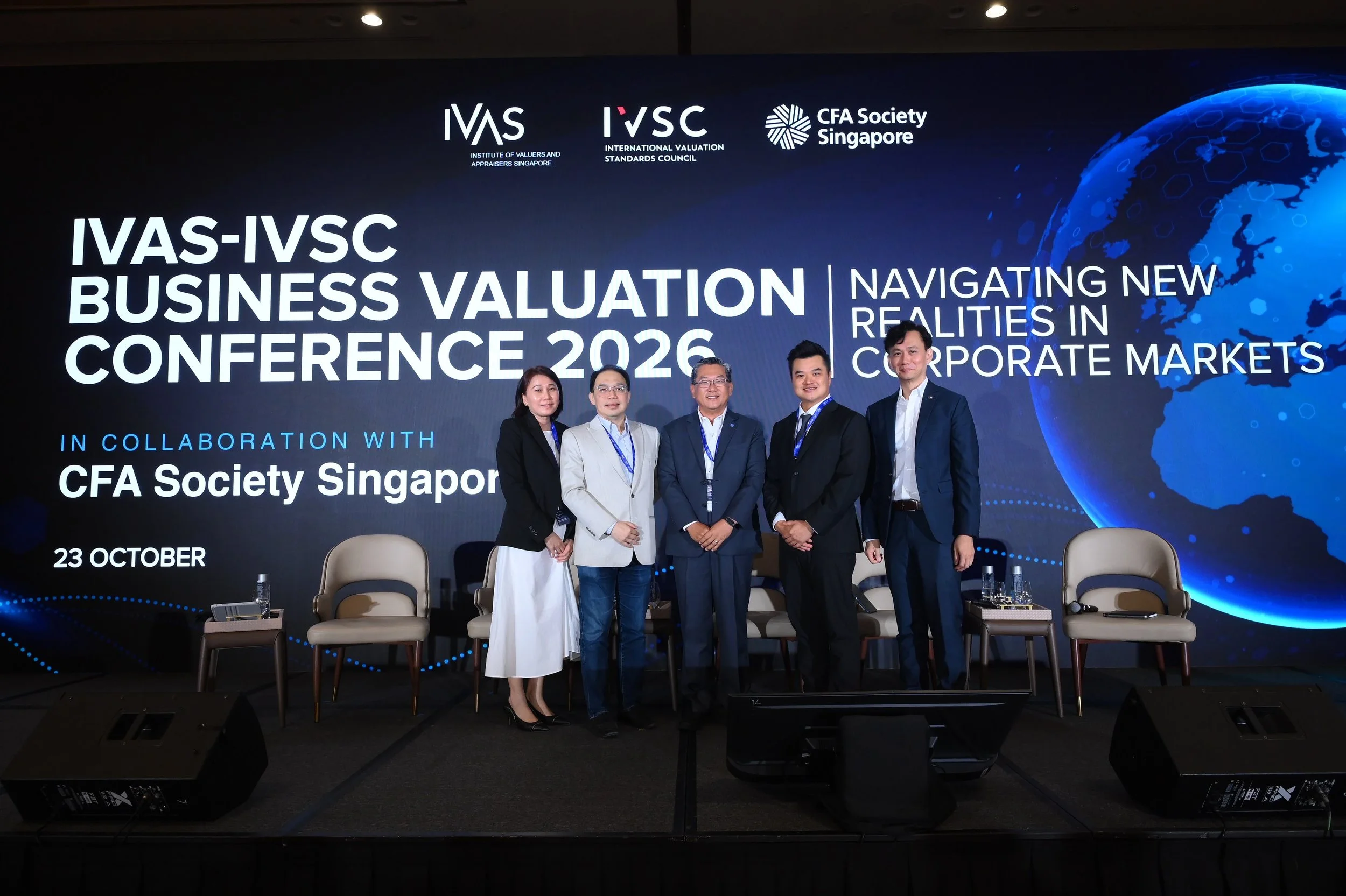
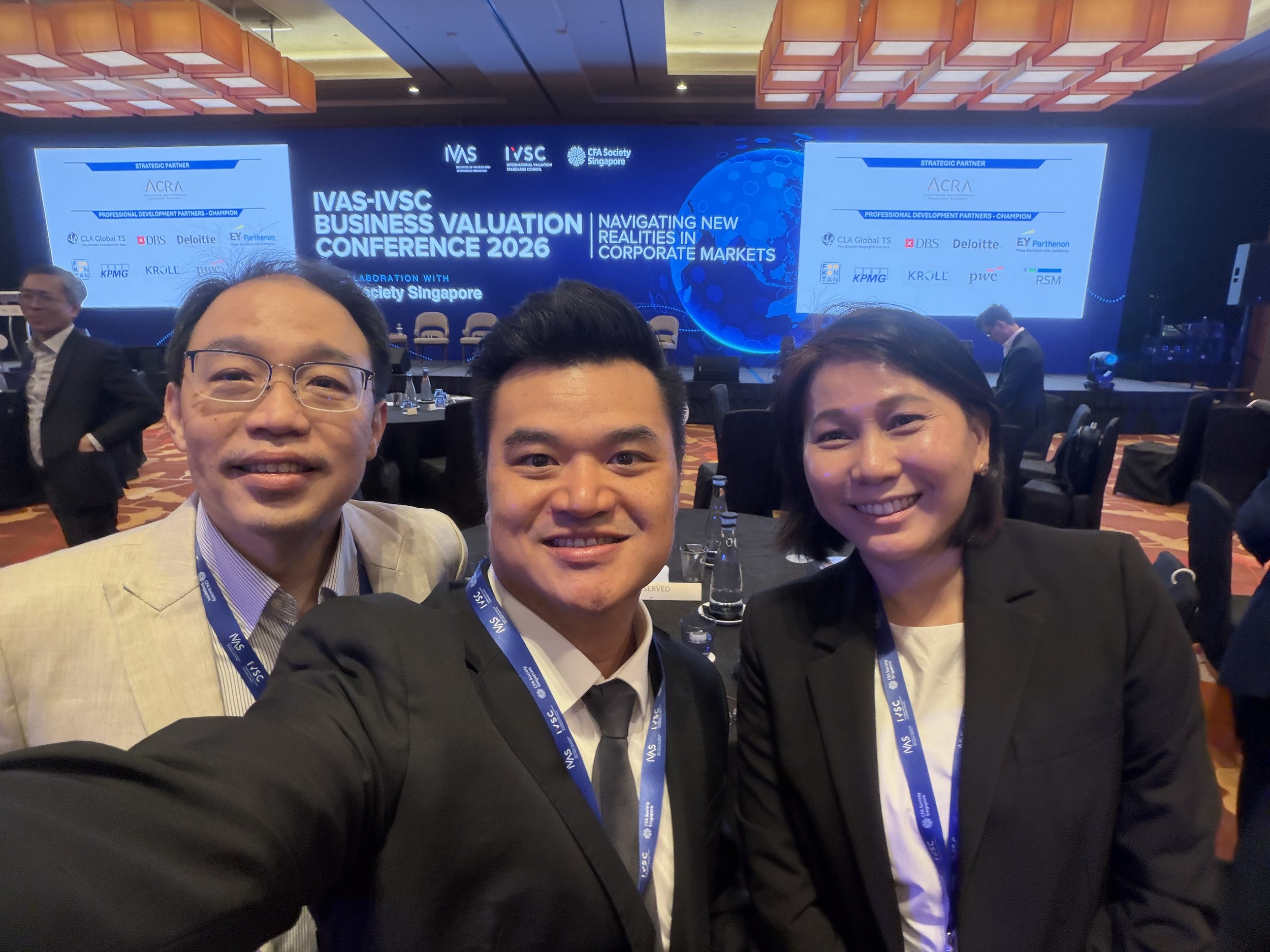
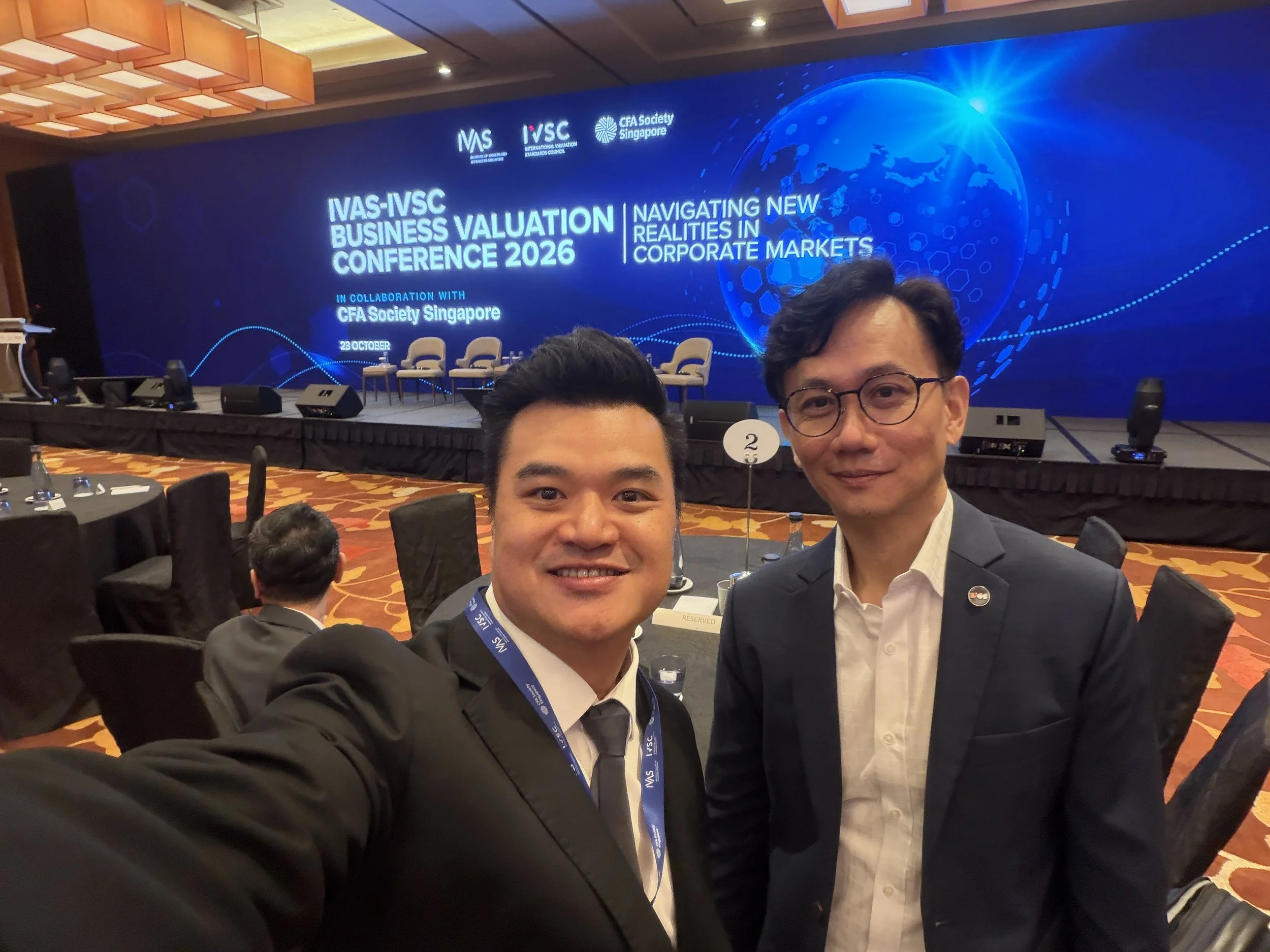
That question brought together some of Singapore's leading voices in government, investment, valuation, technology and intellectual property at the IVAS-IVSC Business Valuation Conference on 23 October 2026.
Among the speakers were Heng Swee Keat, Chairman of the National Research Foundation; Indranee Rajah, Minister in the Prime Minister's Office and Second Minister for Finance and National Development; and Lim Hwee Hua, Chair of the Board of Trustees of the International Valuation Standards Council.
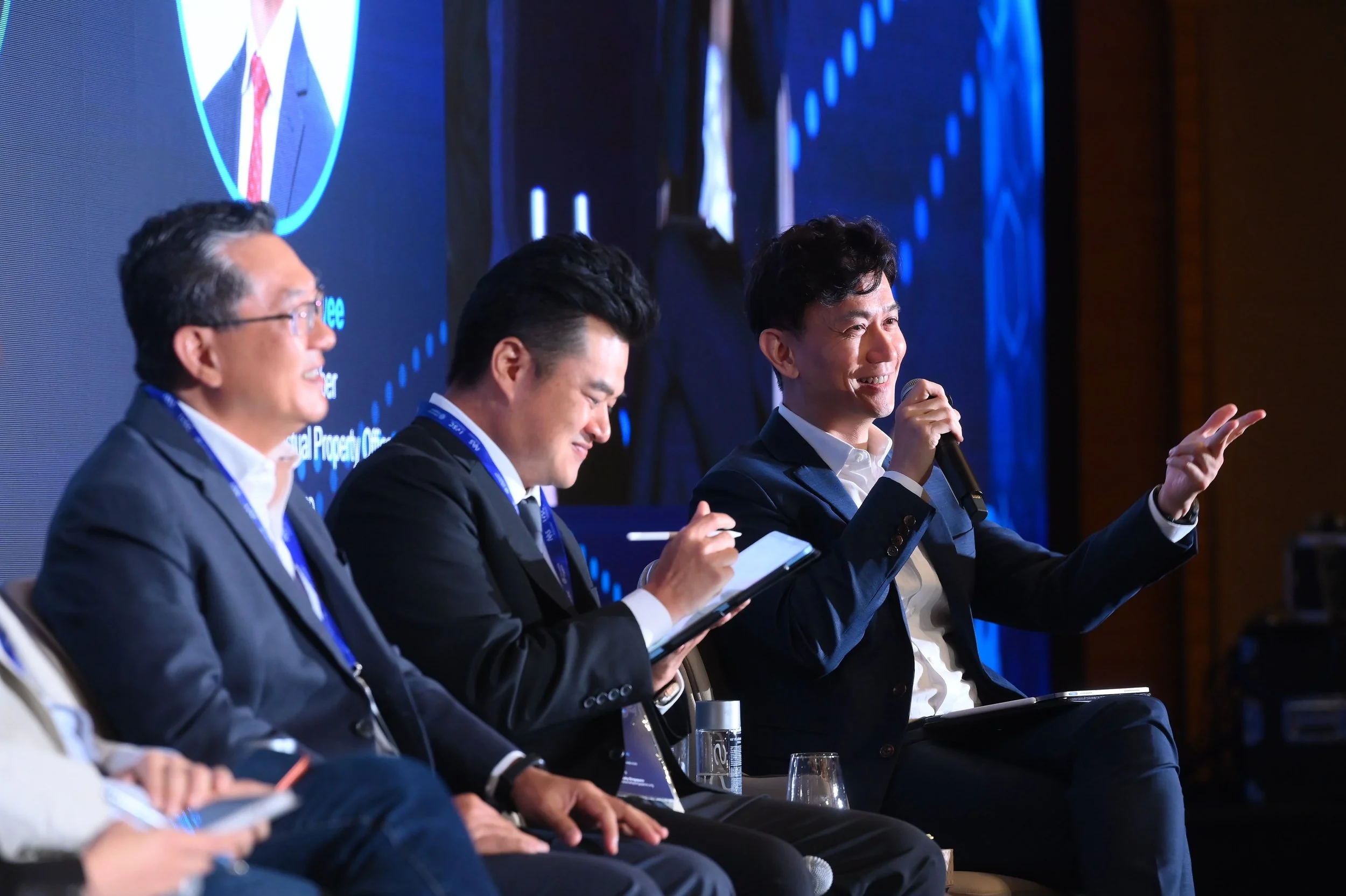
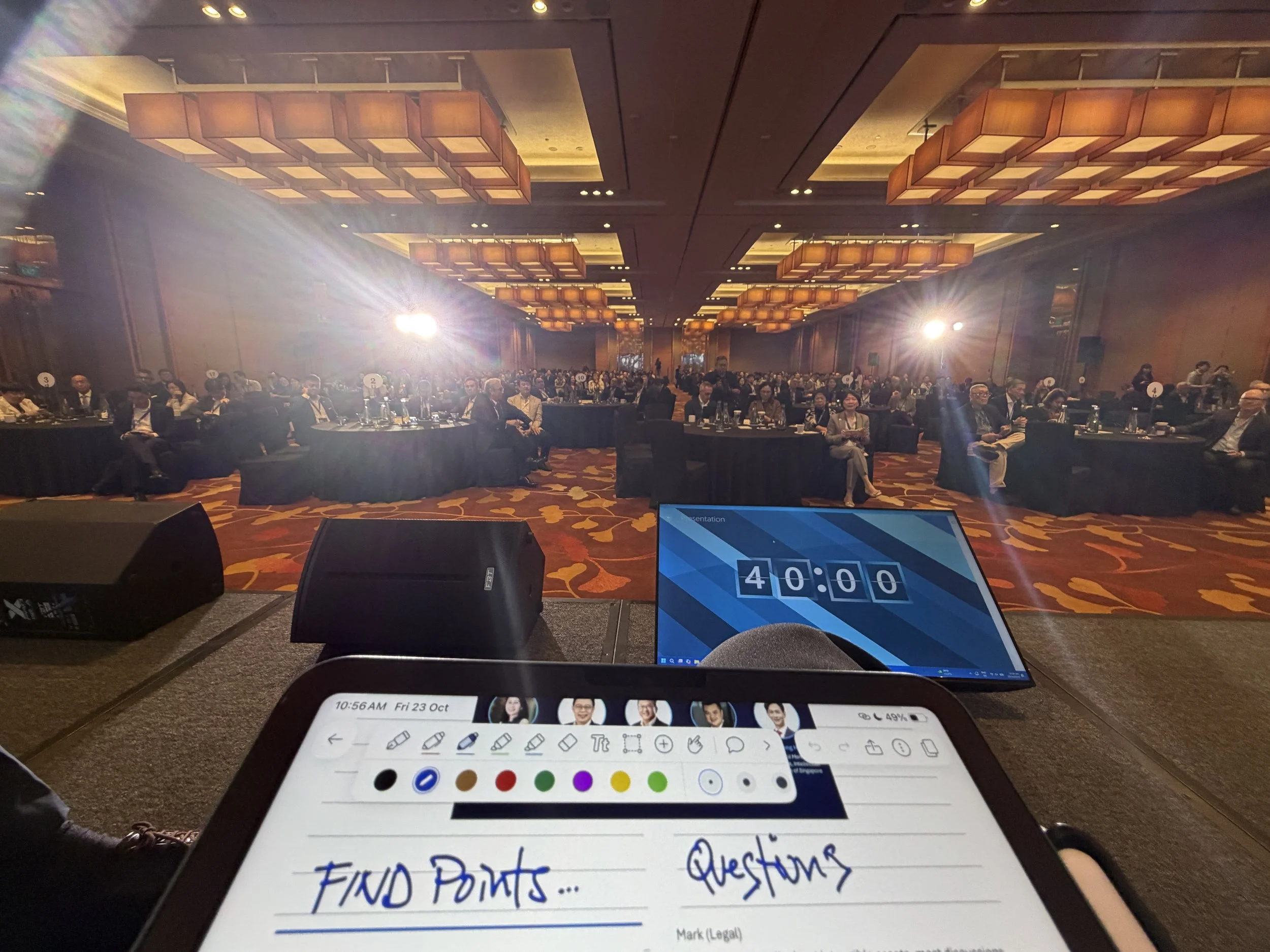
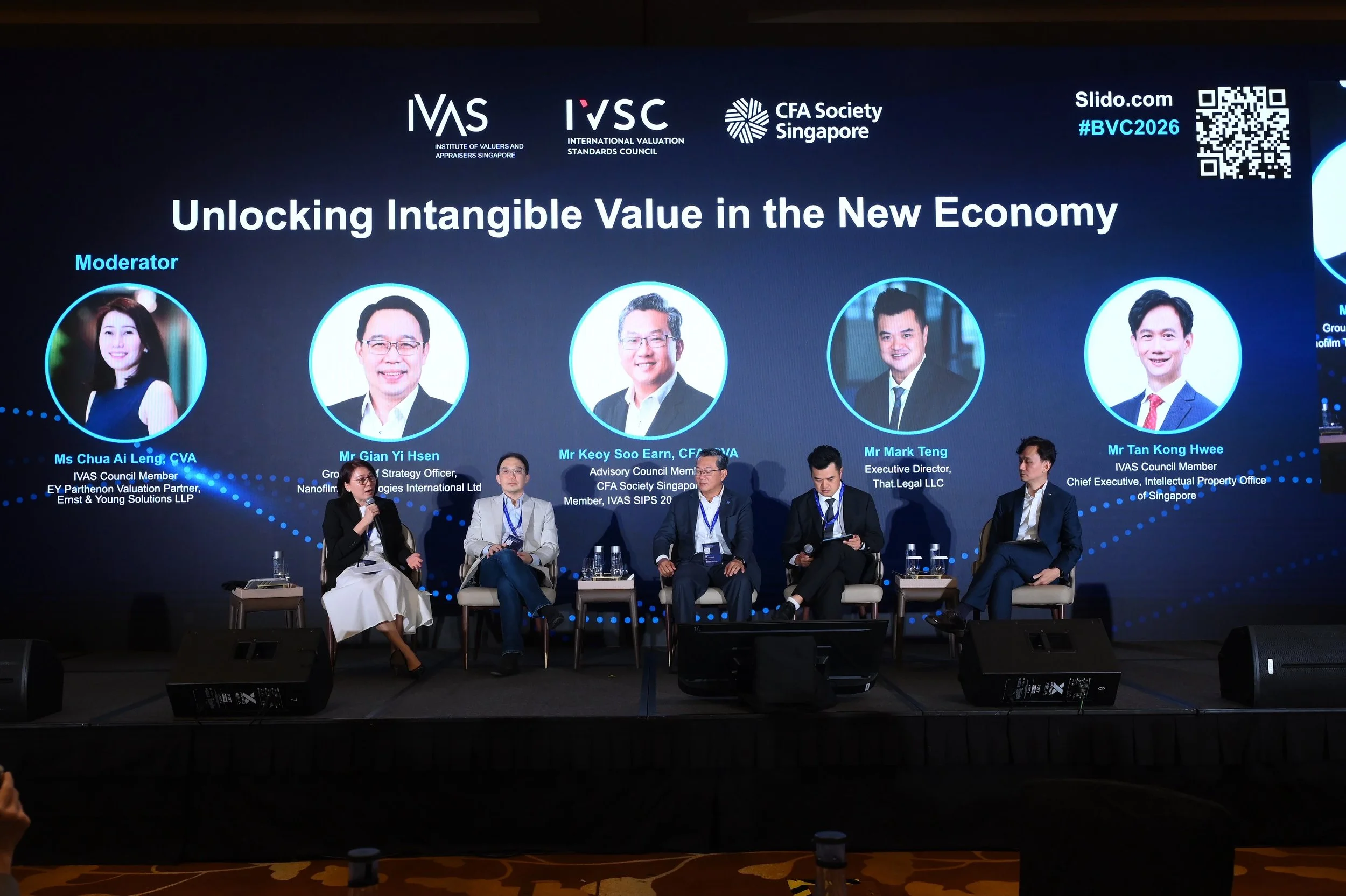
That.Legal's Executive Director, Mark Teng, later joined Tan Kong Hwee, Chief Executive of the Intellectual Property Office of Singapore (IPOS); Keoy Soo Earn, Advisory Council Member of CFA Society Singapore and IVAS SIPS 2030 Task Force Member; and Gian Yi Hsen of Nanofilm Technologies International, for a panel moderated by EY's Chua Ai Leng.
The topic was Unlocking Intangible Value in the New Economy.
Appropriately enough, there was plenty of value in what was said.
92% of value is something you can't touch
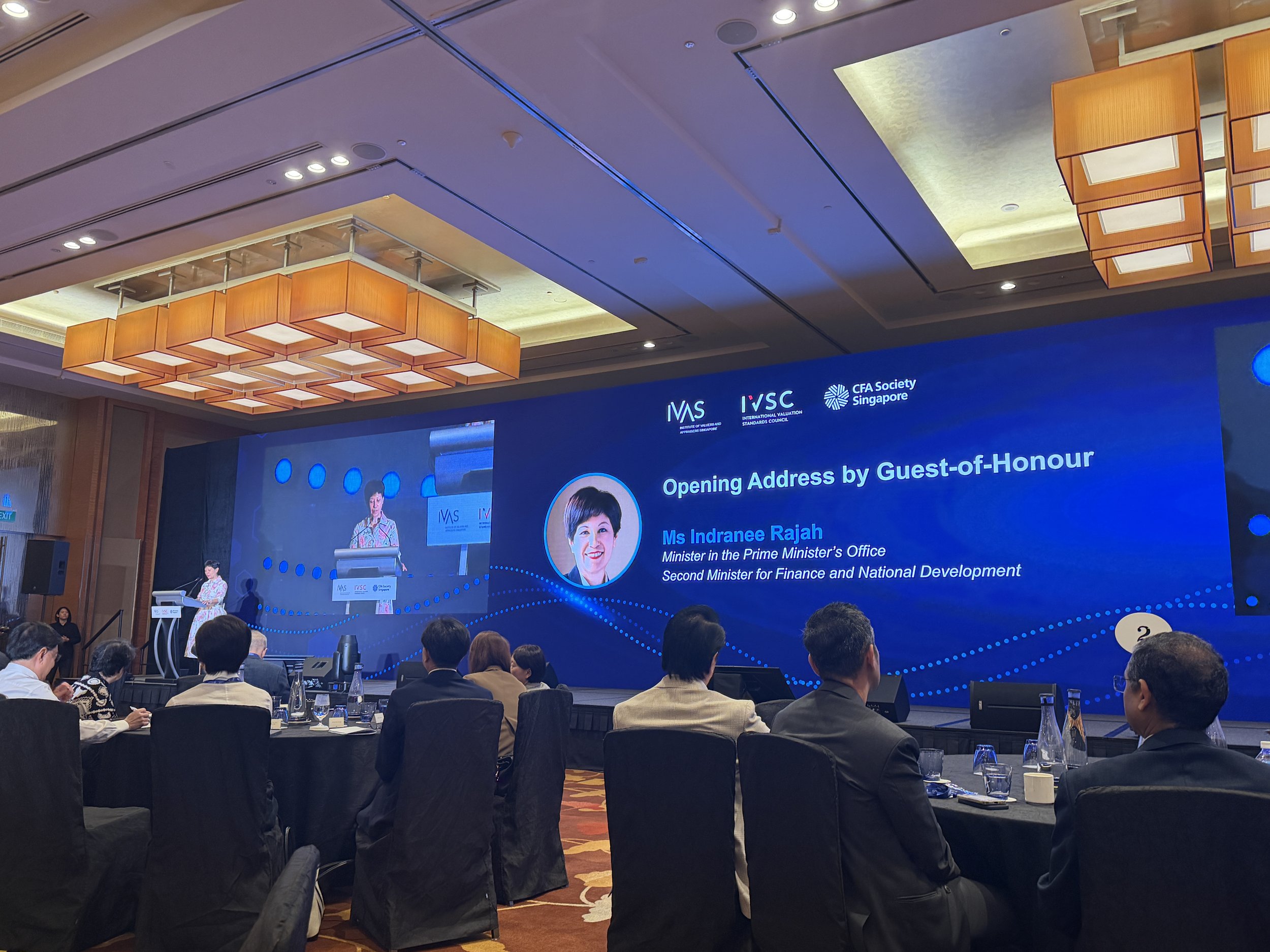
Minister Indranee Rajah opened with a striking statistic: intangible assets account for 92% of the market value of S&P 500 companies.
Those intangibles include intellectual property, brands, data, networks and know-how.
Her broader point was just as important. Technology may change the practice of valuation, but it does not remove the need for professional judgment. AI can analyse large amounts of data, generate insights and test scenarios quickly. Someone still needs to determine whether the assumptions are reasonable, whether the underlying information can be trusted and, ultimately, take responsibility for the conclusion.
AI can run the model. It can't take responsibility for the answer.
When nobody knows what happens next, think longer
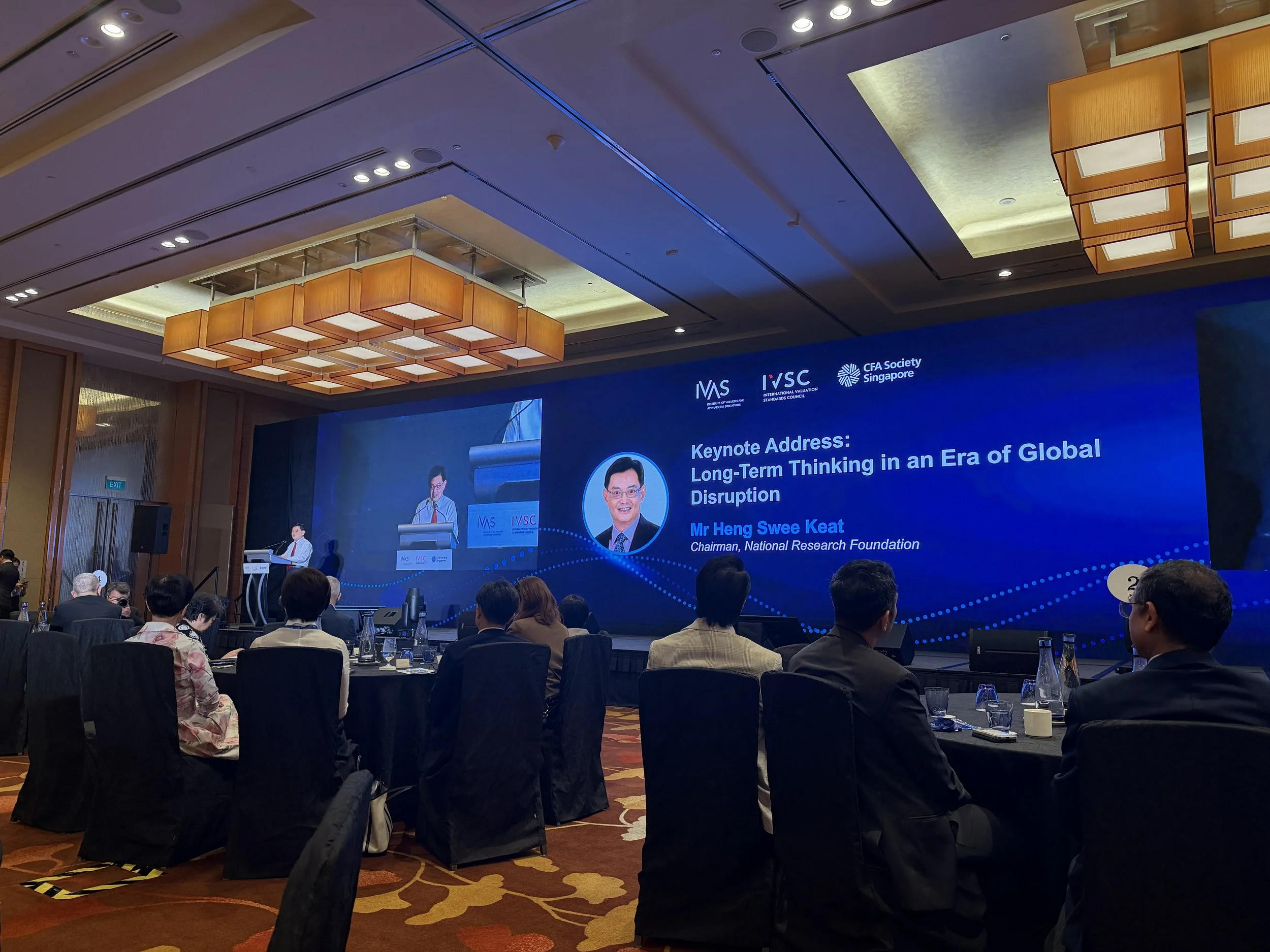
Mr. Heng Swee Keat approached value from a different direction: uncertainty.
He compared long-term decision-making to driving. You obviously have to watch the road and the cars immediately in front of you. But you cannot lose sight of where you are actually going.
Uncertainty makes long-term thinking more important, not less.
Research, technology and innovation may contain enormous potential. But potential is not the same as realised commercial value. As Heng observed, promising technology may never find a viable market, and valuable innovation may not necessarily translate into a profitable business.
And, inevitably, there was AI.
Recalling a conversation with a lawyer, his point was that the lawyer who uses AI may replace the lawyer who does not.
We plead guilty.
But AI also illustrates the problem rather nicely. Having exciting technology is one thing. Understanding what you own, what gives you an advantage and how you capture the resulting economic value is quite another.
If you can't see it, how do you value it?
That brought the discussion neatly to Tan Kong Hwee, CEO of IPOS.
What you cannot see, you cannot value.
Singapore has therefore been trying to make the invisible more visible.
One part of that infrastructure is the Intangibles Disclosure Framework (IDF), which provides businesses with a systematic way of identifying and communicating their intangible assets. The Framework is built around four pillars: Strategy, Identification, Measurement and Management, or SIMM.
The point is not simply to make companies produce another report.
The Framework is intended to provide stakeholders with consistent information about a company's intangibles so that they can make better-informed assessments of its business and financial prospects.
The upside could be significant. Tan cited IPOS research indicating that SGX-listed companies with good patent portfolios command 2.7 times more market capitalisation than those without.
His bigger challenge to businesses, however, was one of mindset.
Too often, companies see IP as a cost. The opportunity is to start thinking of it as an investment.
Investors aren't buying yesterday
Keoy Soo Earn brought the investor's perspective.
Historical financial information tells investors what a company has done. Intangible assets can help explain what it might be capable of doing next.
Whatever we pay today, we are not buying the past; we are buying into the future.
That is why a list of IP registrations, by itself, is not terribly interesting.
The real questions are how those assets connect with the business model, where management is investing and whether they can help sustain or grow the value of the business.
A patent framed on a wall is still just a patent framed on a wall.
A patent is only the beginning
That was evident from the experience shared by Gian Yi Hsen of Nanofilm.
For a deep-tech company, proving that technology works does not mean customers will adopt it. Commercialisation can require validation, partnerships and working out the business model through which that technology reaches the market.
Not everything valuable comes with a registration number.
Know-how and expertise may create value even where those capabilities are not easily captured through formal IP rights. Gian explained how mapping intellectual assets could expose areas where value was being created but was not necessarily fully captured through IP.
That is precisely why the IDF goes wider than patents and trade marks. Its six categories encompass marketing-related, customer-related, artistic-related, contract-related, technology-related and human-capital-related intangibles.
In other words, your registered IP portfolio may be only one part of the story.
The lawyer's inconvenient question: do you actually own it?
Which brings us to the legal part.
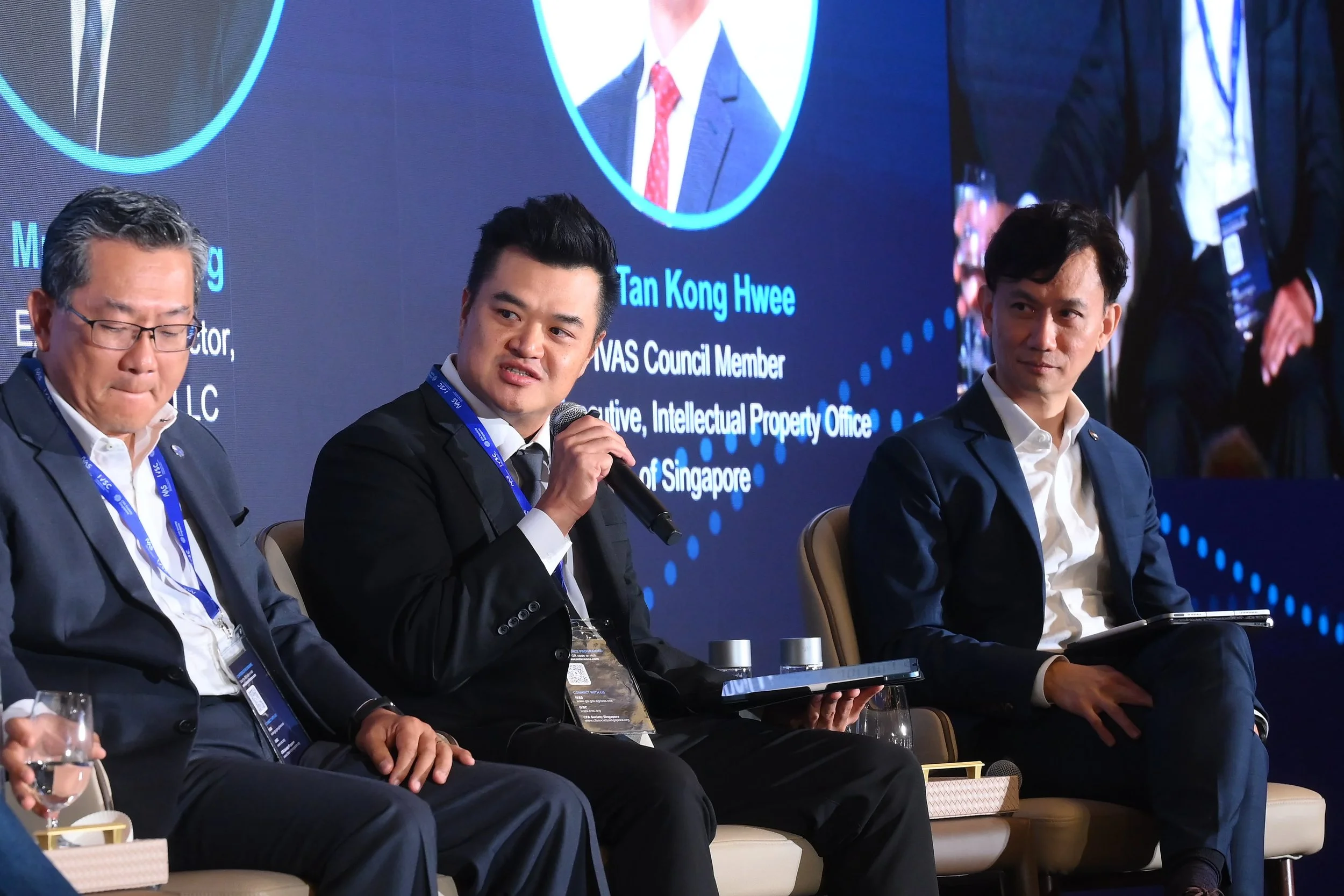
That.Legal's Mark Teng was invited, as he put it, to play a little 'devil's advocate'.
Before assigning a dollar value to something intangible, lawyers tend to ask some inconvenient questions:
· What exactly do you own?
· Where do you own it?
· Can somebody copy it?
· And, if they do, can you stop them?
Take patents.
Having a patent does not necessarily mean having a valuable patent. The important commercial question is the scope of protection. Does the right meaningfully control an important technology, or is it what Mark rather impolitely called a 'vanity patent'?
Trade marks raise another issue: geography.
Rights are territorial. A business can spend years developing a successful brand at home, expand overseas, and discover that its legal position there looks very different.
That makes IP planning part of commercial strategy rather than legal housekeeping.
One practical strategy discussed by Mark was to 'plant the flag' early. Where appropriate, businesses can consider securing trade mark rights in strategically important markets ahead of expansion, while taking local legal requirements into account.
An international IP portfolio can therefore do more than protect something a company has already built.
It can support where the company intends to go.
From intellectual property to intellectual assets
This is also where the conversation becomes wider than traditional IP law.
A patent can be registered. A trade mark can be registered. Copyright can subsist in a work.
But what about customer relationships? Contracts? Proprietary processes? Data? Technical know-how? Institutional knowledge residing in your people?
The Intangibles Disclosure Framework recognises a much broader universe of intangible assets than conventional registered IP rights.
From a business perspective, that distinction matters.
A company may have spent years building assets that contribute materially to its competitive advantage without ever stepping back and asking what those assets actually are, how they interact, what risks threaten them, and whether the company is doing enough to capture their value.
And sometimes the legal answer may be uncomfortable.
An asset the business regards as critical may not be owned as securely as management assumes.
A key piece of IP may sit with a founder, contractor or collaborator rather than the company.
A commercially important brand may be protected in Singapore but not in the markets into which the company plans to expand.
Or something genuinely valuable may not be suitable for registration at all, requiring the business to think differently about how it protects that advantage.
Finding the asset is therefore only the start.
Making the invisible valuable
This is an area particularly close to home for That.Legal.
Mark Teng was a member of the Intangibles Disclosure Industry Working Group that developed the IDF, nominated by the Law Society of Singapore's IP Practice Committee. The Working Group brought together expertise from across the intangible-assets ecosystem.
The resulting Framework asks businesses to consider four deceptively straightforward things:
· Strategy: How do your intangibles contribute to your business and competitive advantage?
· Identification: What intangibles do you actually have?
· Measurement: What metrics or drivers help you understand whether they are creating value?
· Management: How are you managing the opportunities and risks associated with them?
This is about more than disclosure for disclosure's sake.
The Framework identifies potential benefits including supporting business expansion, marketing and capital raising, while also helping senior management formulate corporate and business strategy around intangibles.
And that brings us back to the lawyer's slightly inconvenient questions.
Because identifying an intangible asset is only part of the exercise.
· Do you own it?
· Have you protected it?
· Can your competitors replicate it?
· Can you commercialise it?
· And does your IP strategy support where the business intends to go next?
Those are not simply legal questions anymore.
Increasingly, they are questions about business value.
So, what is hiding inside your business?
Perhaps it is a brand that has taken twenty years to build.
Perhaps it is proprietary technology.
Perhaps it is customer relationships, contractual rights, data, software, know-how, processes or the accumulated expertise of your people.
Some may already be well protected. Others may not be. And some may not even have been recognised internally as assets contributing to the company's competitive advantage.
The IDF provides businesses with a structured framework for beginning that exercise.
As a member of the Industry Working Group that developed the Framework, Mark brings an IP and legal perspective to that conversation. That.Legal assists businesses in understanding their intangible assets and considering how those assets intersect with their broader IP, protection and commercialisation strategies.
There is also a practical reason why now may be a good time to explore the issue.
Government and government-supported schemes may be available to support businesses with the cost of undertaking this work.
If much of your company's value does not appear on its balance sheet, perhaps it is time to find out what is actually there.
Ready to find the value hiding in your business?
Reach out to Mark @ That.Legal to find out more about the Intangibles Disclosure Framework, the support that may be available, and how we can help you turn your intangible assets into a more deliberate part of your business strategy.